
Boutique Coliving in Singapore: Why Cultural Living Matters in a Flexible City
In a shophouse, one is thrust directly into the street. There is no lobby buffer, no controlled separation between inside and outside.
It is a city built on movement.
People arrive for work, leave for opportunity, return for family, and move again for growth. In between, many of us live in apartments designed to be efficient, neutral, and easy to exit. In such a situation, coliving in Singapore, short-term rentals, and flexible leases have become not only convenient options but practical responses to modern life.
Flexibility does have its cost.
When everything is designed to be temporary, it becomes more and more difficult to feel anchored. Homes turn into stopovers. Neighborhoods blur into one another. Life becomes something you pass through, rather than participate in.
The question worth asking is not whether flexible living is good or bad. It’s whether flexibility has to mean detachment.
The heritage shophouses offer a quiet counterpoint to this assumption.
Ready to live different with figment?
Join the 4000+ working professionals Figment has hosted over the past 34 years
Historically, these buildings have never been singular in purpose: they housed families, businesses, communities, and rituals all at once. They changed with the city, taking on new uses without erasing the old. In doing so, they modeled a form of living that feels increasingly relevant today: flexible, but rooted.
This is why heritage stays resonate so strongly in a transient city. They provide continuity without demanding permanence.
In a shophouse, one is thrust directly into the street. There is no lobby buffer, no controlled separation between inside and outside. You open your door to immediately encounter the neighbourhood – its rhythms, sounds, and people. With time, the exposure changes how you live.
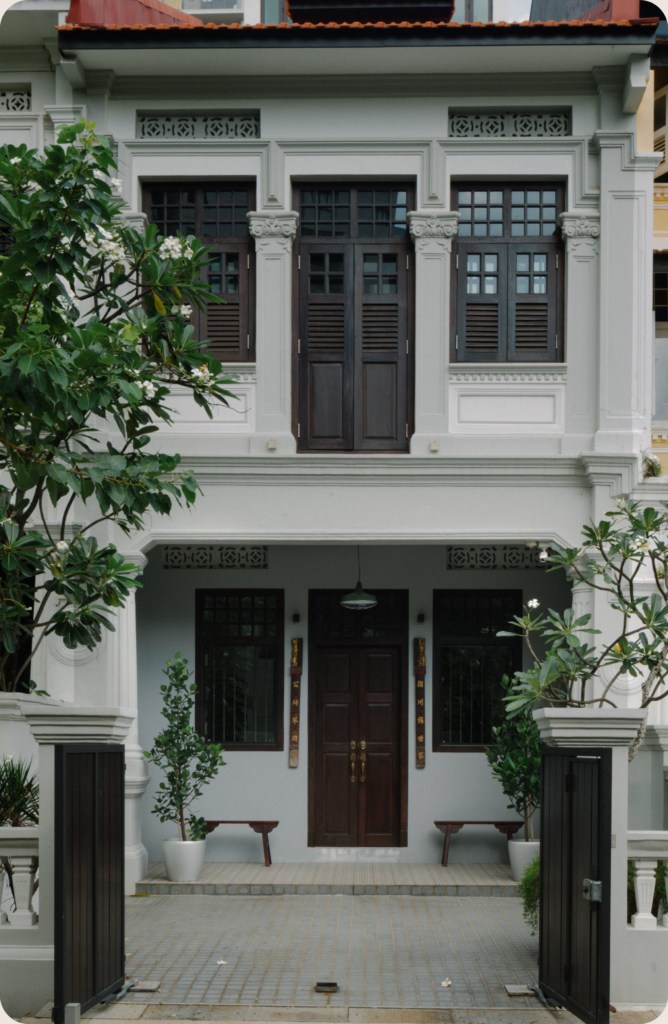
You notice patterns. You learn the tempo of the street. You begin to recognise faces, even if you never exchange names. These aren’t sentimental details. They are signs of cultural living, where place is experienced rather than consumed.
By contrast, so many modern rentals are designed to be interchangeable. They offer ease and privacy but usually at the cost of context. When every building looks and feels just the same, it becomes easy to disengage from where you are.
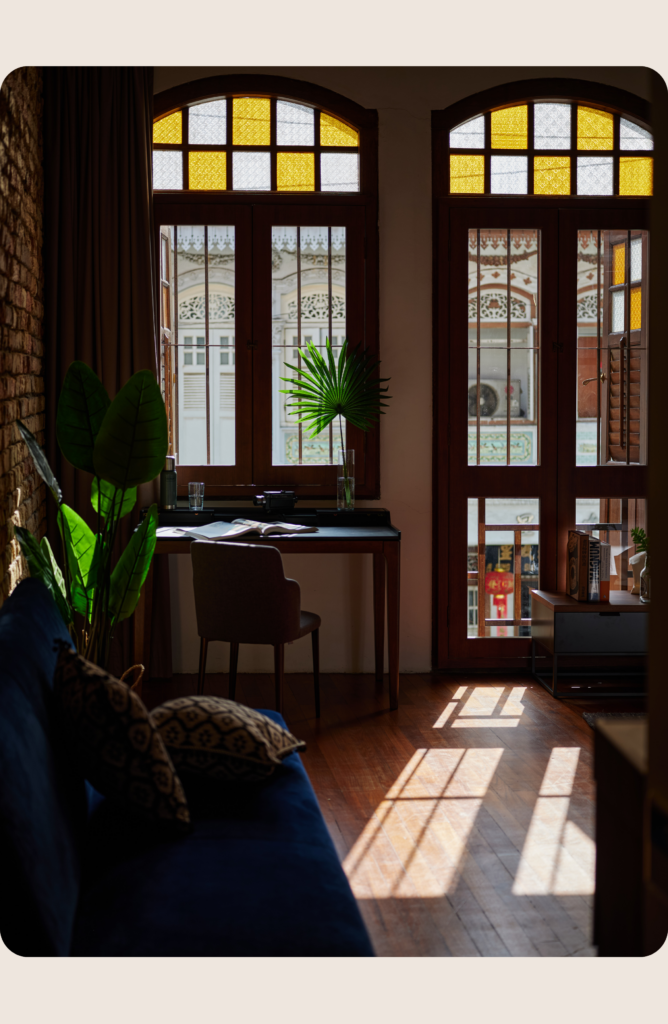
This is where design matters – not as decoration, but as a framework for behaviour.
Shophouses slow you down. Proportions, materiality and layout foster consciousness. Light enters irregularly. Sound travels in a different way. Stairs require consideration. These are some of the sources of friction – but also of presence. You are more aware of how you move, where you stop, and how you share space.
For those opting for flexible rentals or short-term rentals in Singapore, this sort of environment offers something rare: a sense of belonging which doesn’t depend on long-term commitment. You may not stay forever, but while you’re there, you are unmistakably somewhere.
In a coliving Singapore context, this becomes all the more important. Shared living works best when it’s anchored by shared respect – for the home, the neighbourhood, and the histories that shape both. When the building itself carries character, it subtly sets expectations. You don’t treat the space as disposable, because it clearly isn’t.
Importantly, it is not about nostalgia.
It’s about continuity: about knowing that for modern life to move forward, it does not have to erase what was there previously. Shophouses show that old structures can support the needs of contemporary life—flexible leases, modern amenities, evolving lifestyles – without losing their identity.
It is this balance that makes heritage spaces compelling for people who live globally but want to feel local: people who value autonomy, but not isolation; movement, but not anonymity.
Belonging, in these terms, is not something that one feels right away. It is accomplished through repetition: the same walk home, the same light in the morning, the same passing interactions that quietly build into meaning. These rituals don’t require permanency – but they reward attention.
At Figment, we believe that flexibility and rootedness are not opposites.
A house can be adaptable without being empty. Temporary without being forgettable. Flexible living, combined with thoughtful design and cultural context, can still provide depth.
Because in a city defined by change, the places that stay with us longest are rarely the most efficient ones. They are the ones that asked us to slow down, pay attention, and participate – if only for a while.
Similar Posts
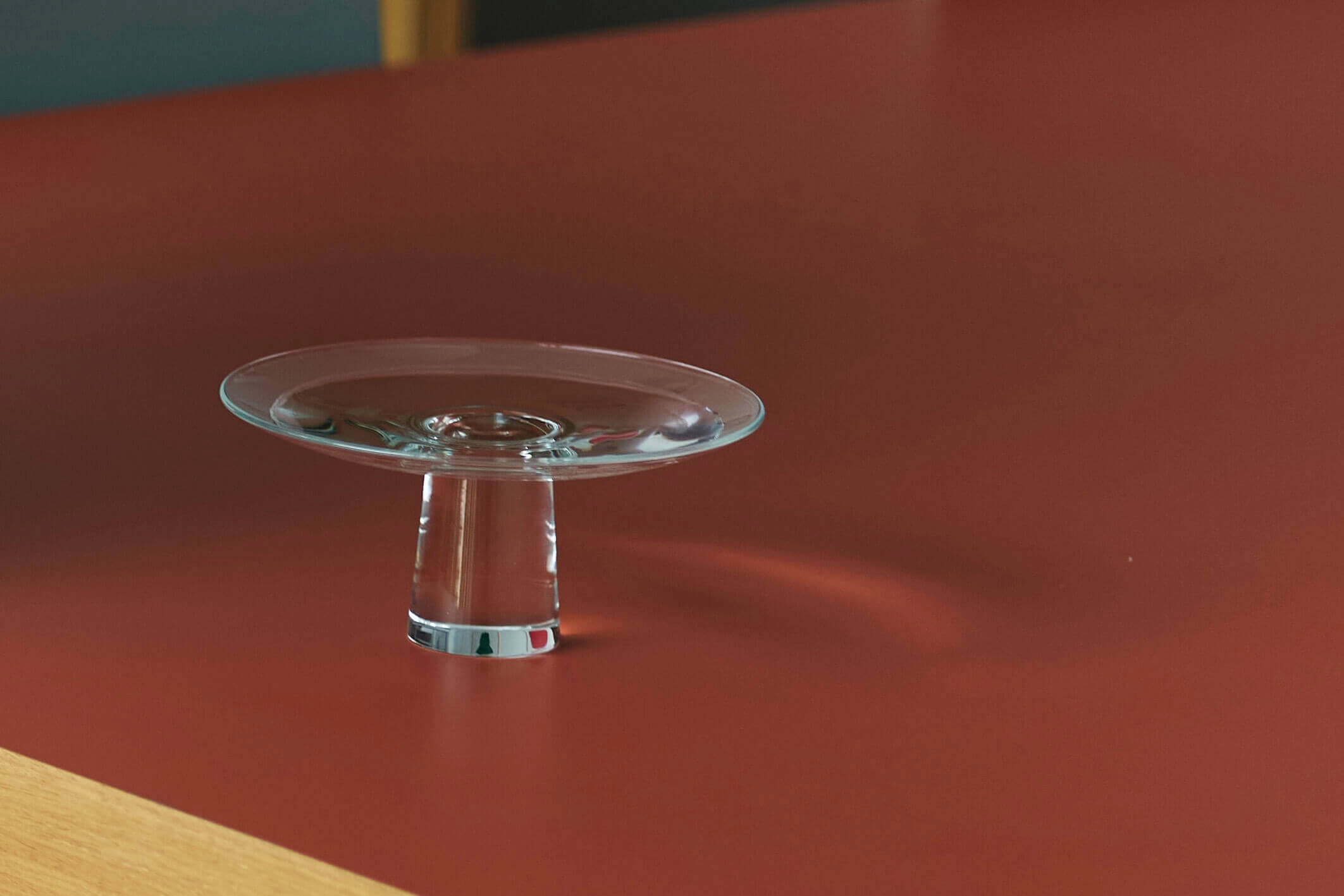
How Artisan wares from rural Japan landed in a Duxton Hill Shophouse
From coffee mugs to sake ware, every item inside Yusuke Shibata’s Duxton Hill gallery-store is an exquisite masterpiece.

Comments