


Renting Near an MRT Station in Singapore: A Location Guide for Commuters
Singapore’s MRT network is one of the fastest ways to move across the island, and for most renters it quietly decides where they should live. A flat that looks affordable on paper can lose its shine once a 20-minute walk to the platform is added to every commute. Searching around a station rather than a postcode is one of the simplest ways to protect both your time and your budget.
Why an MRT-first search makes sense
Car ownership in Singapore is expensive, so most residents rely on public transport for the daily commute. Living within a short walk of a station means predictable travel times, easy access to malls and food, and no dependence on ride-hailing during peak hours. When you compare homes, treat “minutes to the nearest station” as a core filter, not an afterthought. Whether you are looking at co-living in Singapore or a whole unit, connectivity is what you will feel every single day.
Match the line to your daily route
Singapore’s lines each serve different parts of the city, so start from where you work or study and work backwards:
- East-West and North-South lines meet in the central business district at Raffles Place and City Hall, and the East-West Line also stops at Tanjong Pagar, making them convenient for finance and CBD workers.
- Downtown Line links Bugis, Chinatown and the Downtown business core, with useful stops at Newton and Little India.
- Circle Line loops around the city and reaches one-north, Buona Vista and Holland Village, handy for tech, research and biomedical hubs.
- Thomson-East Coast Line connects the north to the East Coast through Orchard and Marina Bay, opening up eastern neighbourhoods for city-centre workers.
What “near” really means
Listings love the phrase “5 minutes to MRT”, but that figure is often measured in a straight line rather than along the actual walking route. Before committing, trace the real path on a map and, if you can, walk it once. Aim for a sheltered walk of under ten minutes, and check for covered linkways so you stay dry during Singapore’s frequent downpours. A home that is genuinely close to a station is worth more to your daily life than a slightly larger one two bus rides away.
Balancing rent, space and commute
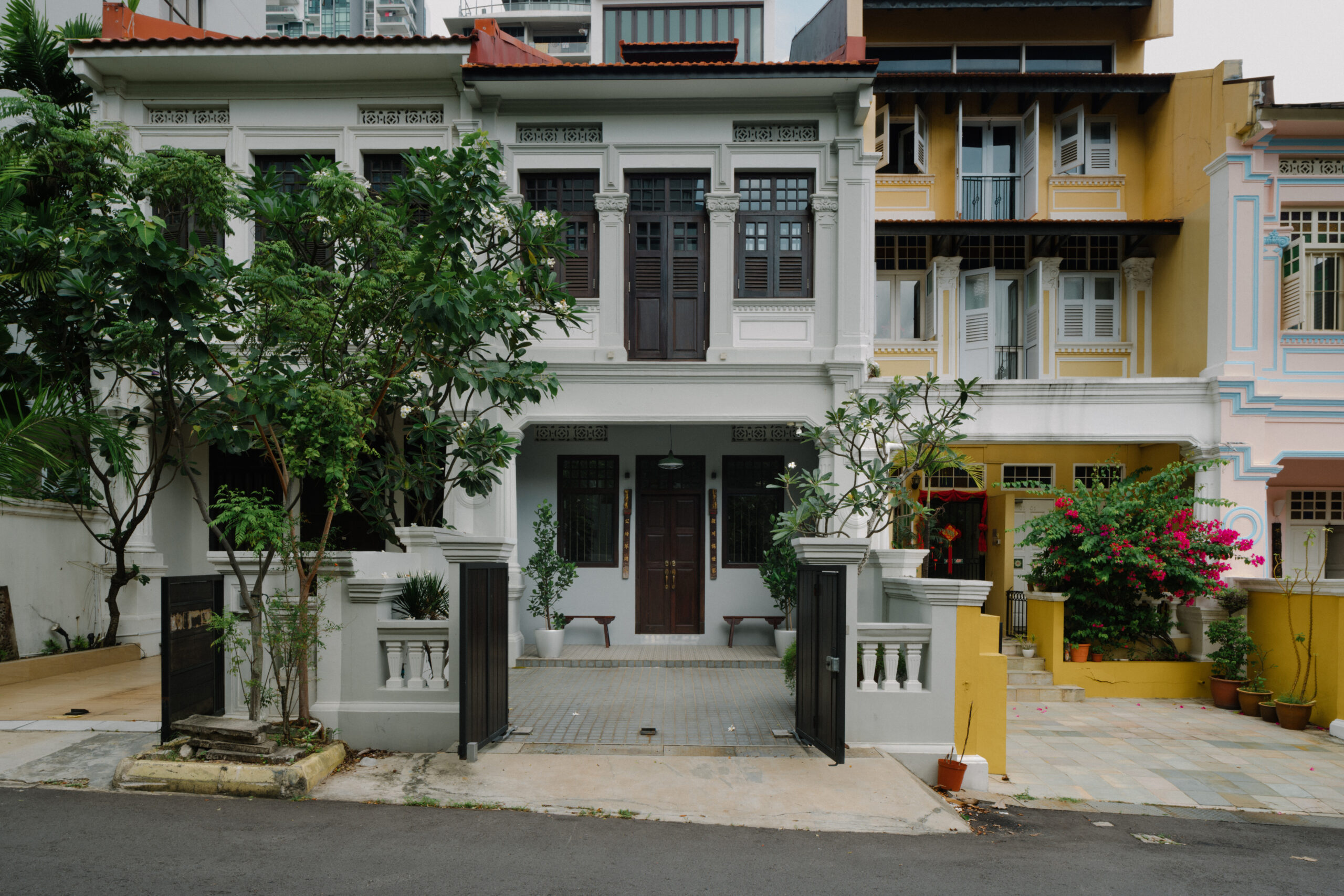
Homes right beside central stations usually command a premium per square foot. If you want a central, well-connected location without leasing an entire unit, a private room in a shared home can be a smart compromise. Figment’s co-living for professionals and its conserved shophouses for rent sit in walkable, transit-linked heritage districts, and browsing the full list of houses is a quick way to see which locations suit your route.
Frequently asked questions
Do homes near MRT stations cost more to rent?
Generally, yes. Proximity to a station is a convenience that landlords price in, especially near interchanges. Shared and co-living options can offset this, letting you keep a central address while splitting the cost of common spaces and utilities.
Does location change the minimum lease?
No. The rules apply island-wide. A private residential home has a legal minimum stay of three consecutive months, while HDB flats and rooms require at least six months. For anything shorter you would need a licensed serviced apartment, which can be booked from seven days. If a three-month arrangement fits, see Figment’s three-month rental options.
Map your commute first, then let the shortlist of stations guide your search. It is far easier to fall in love with a home you can actually reach with ease.
Similar Posts
Is Airbnb Legal in Singapore? The Rules, Penalties and Legal Alternatives
Airbnb-style short stays under three months are not allowed in Singapore homes. Here are the rules, the penalties for hosts, and the legal ways to book a short stay.
Co-Living in Singapore for Couples: What to Know Before You Move In
Can couples do co-living in Singapore? How shared homes work for two, what to check on room types and house rules, and how it compares to renting a flat.
How Far Does S$1,000 a Month Go for Rent in Singapore?
A realistic look at what a S$1,000 monthly budget rents in Singapore, from co-living rooms to HDB common rooms, and how to stretch it further.

Comments