


Long-Term Apartment Rentals in Singapore: Options, Areas and Costs to Plan For

Most people who move to Singapore for work or study end up signing a long-term rental, yet the market works differently from many other cities. Leases, deposits and the choice between a private flat and a managed home all shape what you pay and how settled you feel. This guide covers the options, the best-known areas and the costs to plan for.
What counts as a long-term rental
In Singapore a long-term rental usually means a lease of twelve months or more, though two-year leases are common. Anything shorter sits in a different regulatory bracket: under Urban Redevelopment Authority (URA) rules, private homes cannot be let for less than three consecutive months, and HDB flats carry a six-month minimum. Long-term leases comfortably clear both thresholds, which is why they offer the widest choice of homes.
Your main options
| Option | Best for | Worth knowing |
|---|---|---|
| Private condominium | Families, those wanting pool and gym facilities | Highest rents; usually unfurnished or partly furnished |
| HDB flat | Budget-conscious renters wanting space | Six-month minimum; owner must meet HDB eligibility rules |
| Shophouse or coliving home | Professionals wanting character and flexibility | Often all-inclusive; community and services bundled in |
| Studio or one-bedroom | Singles and couples | Compact; central locations command a premium |
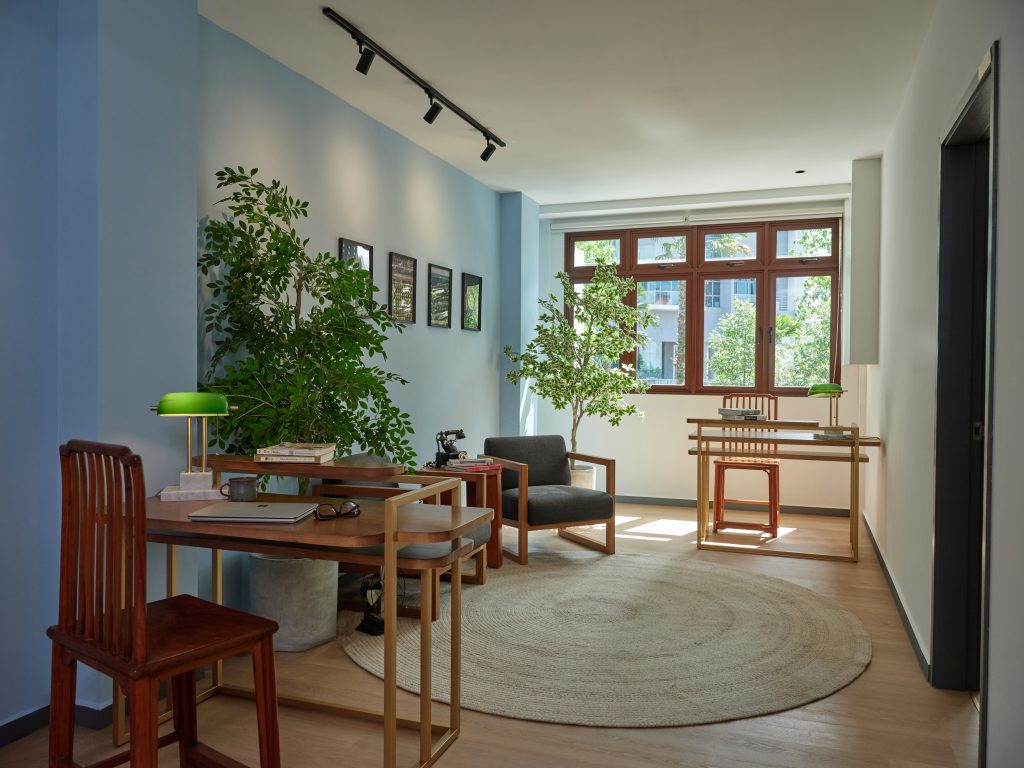
If you value design and community over a standard condo, a shophouse for rent in Singapore or coliving in Singapore can be a strong long-term base. Professionals relocating for a multi-year posting often prefer coliving designed for professionals because furniture, utilities and upkeep are handled for them.
Costs to budget for
The headline rent is only part of the picture. Plan for these upfront and recurring costs before you commit to a lease.
- Security deposit, commonly one month of rent per year of lease, refundable subject to the inventory check.
- Stamp duty on the tenancy agreement, payable to IRAS and based on the rent and lease length.
- Agent commission, where an agent acts for you; confirm who pays before you start viewings.
- Utilities, internet and any maintenance or cleaning, unless your home is all-inclusive.
Bundled homes simplify this by folding most recurring costs into one monthly figure. To weigh a private lease against a managed home, compare our listings for houses for rent in Singapore and studio apartments in Singapore.
How long are typical leases in Singapore?
One and two-year leases are the norm. Many landlords include a diplomatic clause on two-year leases, letting tenants end the agreement early under defined conditions such as leaving the country.
Can foreigners rent long-term in Singapore?
Yes. Foreigners with a valid pass can rent private homes and, subject to HDB rules, HDB flats. Landlords, or any agent acting for them, must verify a foreign tenant’s pass, so keep your immigration details ready when you apply.
How to strengthen your rental application
In a competitive market, preparation helps you secure the home you want. Having your paperwork and budget ready means you can commit the moment you find the right place rather than losing it to a faster applicant.
- Keep your pass and identification ready for the landlord’s immigration-status check.
- Prepare proof of employment or enrolment and, where useful, a previous landlord reference.
- Confirm your move-in date and deposit funds so you can act without delay.
Similar Posts

Coliving Near Every MRT Station in Singapore | Figment
Figment runs boutique coliving houses in eight conserved-shophouse neighbourhoods across Singapore, and every one is a walk from at least one MRT station. Rather than a separate page for every nearby station, here is the full picture in one place: which neighbourhood, which station, which house, and what living there is actually like. Tanjong Pagar […]
Is Airbnb Legal in Singapore? The Rules, Penalties and Legal Alternatives
Airbnb-style short stays under three months are not allowed in Singapore homes. Here are the rules, the penalties for hosts, and the legal ways to book a short stay.
Co-Living in Singapore for Couples: What to Know Before You Move In
Can couples do co-living in Singapore? How shared homes work for two, what to check on room types and house rules, and how it compares to renting a flat.

Comments