
The Quiet Heritage Homes in Singapore
Heritage homes, especially Singapore’s shophouses, occupy this rare intersection of old and new. They are understated yet emotionally magnetic.
Singapore is so often cast as a city that looks to the future rather than the past: one in which new skyscrapers shoot up with startling rapidity and whole districts are reinvented in the space of a few short years. Its MRT lines stretch further, its skyline reaches ever higher, and its ambitions stay unashamedly visionary. And yet, within this restless onward momentum lies a quieter, more contemplative Singapore. One not of steel and mirrored façades, but of timber shutters, terracotta tiles, patterned ventilation grilles, and corridors walked by generations before us. The quiet, heritage homes in Singapore.
Heritage homes, especially Singapore’s shophouses, occupy this rare intersection of old and new. They are understated yet emotionally magnetic. In a hypermodern city defined by efficiency, scale, and acceleration, these homes stand as a reminder that architecture is not merely about progress; it is also about memory, identity, and the deeply human desire to feel connected to where we live. For the residents who eventually find themselves within these restored structures, shophouse living becomes more than a stylistic choice: It becomes a way of perceiving the city differently – a shift in tempo and perspective that quietly transforms daily life.
To enter a heritage home in Singapore is to step into a dialogue with time. Unlike modern apartments, so sleekly and functionally designed for ease and convenience, shophouses carry within them the accumulated texture of lived experience. They have absorbed the rhythms of earlier decades, wearing their history with elegant honesty.
Ready to live different with figment?
Join the 4000+ working professionals Figment has hosted over the past 34 years
A Gentle Counterpoint to the Vertical City
Singapore is a vertical city-state, dominated by its skyline and reputed for its functional and highly organized urban systems. Tower block living is the norm and most residents navigate lift lobbies, airconditioned corridors and automated gates without much thought. It is an impressive way of organizing modern life but often creates feelings of placelessness, as if any tower could exist in any global city.
Heritage homes offer a subtle but powerful counterpoint. Their scale is human, their spaces intimate, their proportions shaped by tropical climate and community rather than by yield calculations. Where modern developments strive for seamlessness, shophouses insist on texture.
In a city that moves fast, heritage homes slow us down. They beckon us to look close, to listen, to feel the grain of wood beneath our hands, to appreciate the imperfect charm of a handmade tile. Their logic is not driven by technology; it is driven by sensibility. And in the process, they restore a form of urban living that feels quietly radical.
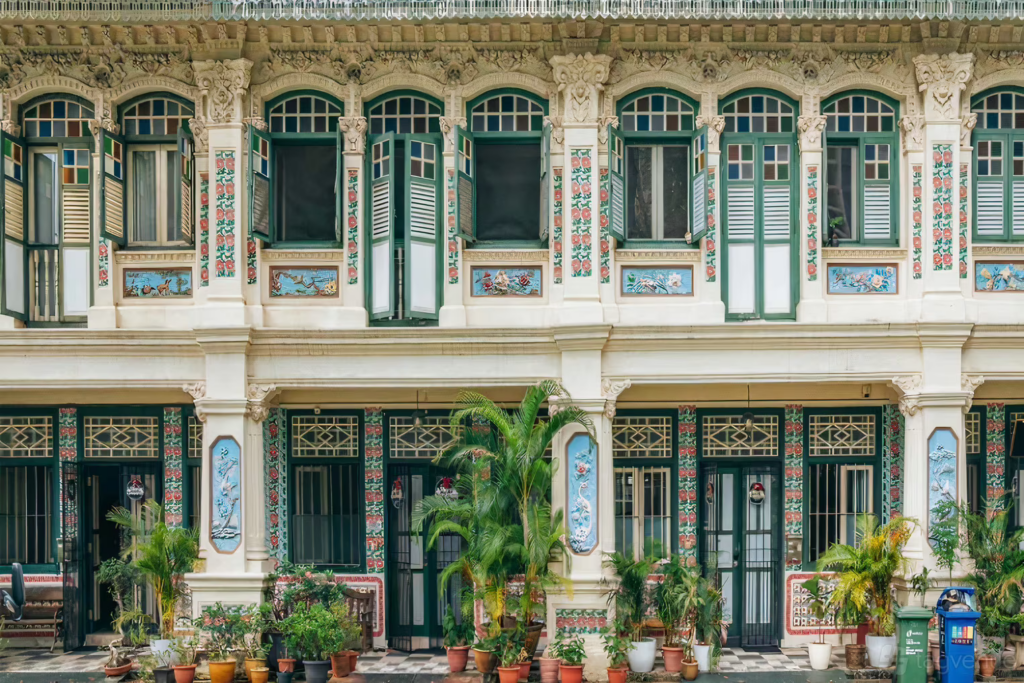
The Emotional Geometry of History
There is something deeply grounding about inhabiting a building that has existed for nearly a century. Residents often describe an immediate sense of calm, as if the walls themselves offer continuity in a city defined by perpetual change. To expats arriving in Singapore, many of whom lead location-independent or highly mobile lives, this sense of rootedness can be especially meaningful. A heritage home becomes a stabilizing force, a space that feels lived in and welcoming even before they have fully unpacked.
Proper preservation is not at all the action of simply returning a structure to its former condition but an act of stewardship respectful to that intangible atmosphere a building accrues with time. Modern interventions should feel sensitive rather than showy, clean rather than clinical. The ideal restoration retains the patina of age while allowing contemporary life to unfold with grace. It does not freeze a building in time; instead, it opens a dialogue between generations.
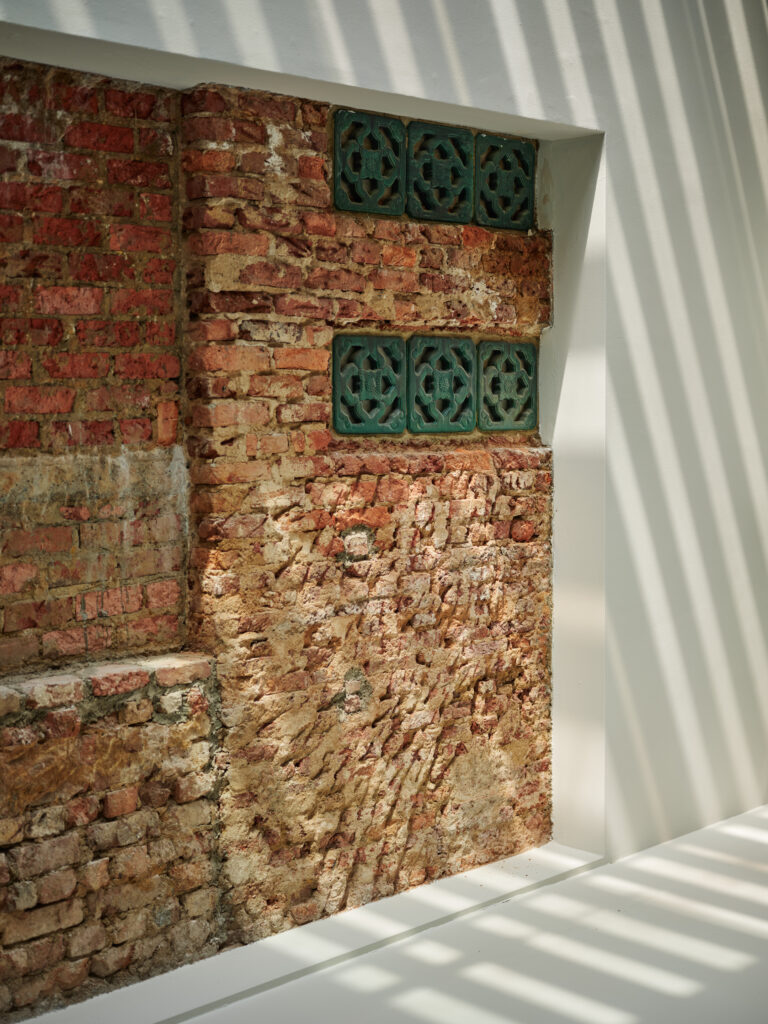
Craft in an Age of Uniformity
Another quality that heritage homes possess, and which is increasingly rare in modern construction, is the visible presence of craft. As efficient as modern apartments may be, they often wear the stamp of machine production. Their clean lines and flawless finishes may impress, yet feel somehow divorced from human touch.
Shophouses are the opposite. Their charm lies in the irregularities created by master carpenters, tile-setters, metalworkers and craftsmen whose skills shaped the building long before the current residents stepped inside. Every component, from a rattan screen to an ironmongery detail, carries the imprint of handwork.
This artisanal quality, amidst so much that is mass-produced, is luxurious. It speaks to a time when homes were made with care, and even functional elements were shaped with aesthetic intention. The appeal of heritage architecture in Singapore is not simply visual, but tactile and emotional, drawing from our deep-seated longing for authenticity amidst an increasingly hyper-digital life.
The Neighborhoods That Still Feel Human
The charm of the shophouses does not stand in isolation. Their greatest appeal lies in the neighbourhoods that surround them. Living in a heritage home in Singapore often means living in districts like Joo Chiat, Jalan Besar or Tanjong Pagar – areas where traditional trades coexist with contemporary cafés, where design studios sit beside hardware shops, and where community life unfolds in plain sight.
To residents from other parts of the world, such neighborhoods offer a kind of civic immersion that no condominium tower can. They initiate the stranger into the particularities of local life: the rhythm of the market street, the character of the shophouse row, the creative pulse of independent studios and boutiques. A sense of community here emanates organically rather than being curated through a roster of amenities.
The Boutique Home as a Cultural Bridge
Figment has reimagined heritage living through the creation of Boutique Homes: design-driven residences that celebrate the cultural and architectural richness of shophouses while offering comfort and inclusivity expected of modern living. These homes are shaped through collaborations with architects, designers, makers, and artists, transforming each shophouse into a distinct spatial narrative.
The result is a living experience that resonates with a new generation of residents, people who may work in finance, technology or global businesses, but yearn for proximity to creativity, culture and authenticity. Boutique Homes function as both domestic environments and cultural touchpoints. They introduce residents to Singapore’s design heritage, connect them to local creative communities, and reframe the idea of what a rental can be.
For many residents, living in a Boutique Home serves as a catalyst toward deeper engagement with Singapore. They attend salon dinners, meet local artists, explore heritage districts, and build friendships around communal spaces that feel a world away from the anonymous common rooms of typical co-living. In this way, the Boutique Home model functions as a kind of cultural bridge, ushering newcomers into the heartbeat of the city.
Living More Slowly in a City Built for Speed
Perhaps the most remarkable effect of living in a heritage home, though, is the transformation of everyday rhythm. Residents describe lingering over coffee by the window longer than usual, noticing the way light moves across the floor; pausing in courtyards to feel out the breeze. These small rituals build towards a larger shift: a more intentional way of inhabiting the city.
Shophouse living encourages presence, instead of speed. It reconnects residents to the sensory pleasures of home. Textures, colours, sounds, scents – which modern apartments often sterilise in the name of efficiency. This slower, more reflective pace spills outward, subtly reshaping the way residents move through Singapore itself.
A Future That Learns from the Past
It is a common misunderstanding that heritage architecture is relevant only to those filled with nostalgia. Within an increasingly digital, accelerated, and globally generic world, places with character have never been in higher demand. Heritage homes matter – they remind us that progress does not require erasing the past, but it can be informed and enriched by it.
It is precisely this tension that positions Singapore as the most promising ground on which to demonstrate that heritage and hypermodernity can coexist. Of all forms, it is arguably the shophouse that best expresses the possibility of their being combined. These stoic buildings continue to stand in quiet defiance against the notion that modern life should be framed by a homogenous aesthetic. It suggests that there remains room in contemporary life for history, craft, community, and beauty.
More to the point, it reminds us that home is not just where we live, but where we have a deep connection.
Similar Posts

Inside Figment Homes: Artisan-Crafted Home Design and Imperfect Beauty
Handcrafted materials, gentle imperfections, and local makers give Figment homes their soul – spaces designed to be lived in, worn into, and felt over time.
The Living Heritage of Singapore Shophouses: A Modern Interpretation
In Singapore’s shophouses, expats find more than beauty – they find belonging, history, and a home with soul.

Belong Everywhere with Figment
In this increasingly globalised world, we constantly ask our location-independent selves the question of where we should live.

Comments